Fridaymy favorite build ✦
Architected and deployed a production-grade autonomous agent stack using OpenClaw: a local-first WebSocket control plane, Dockerized orchestration, and multi-channel productivity integrations (WhatsApp, Slack, Discord).
Flows & screens
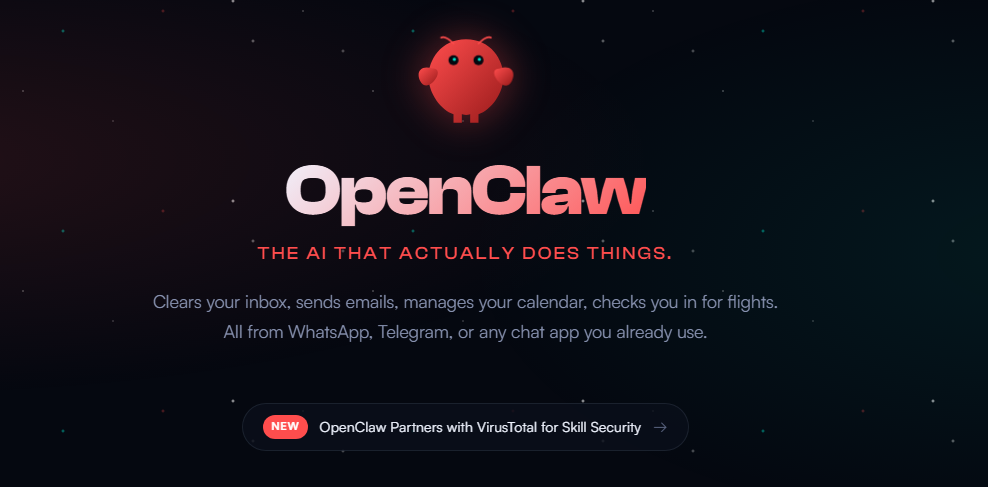
01 Gateway and product surface: local-first control plane, agent runtime, and skills wired into real workflows.
Implementation
Gateway & control plane
Local-first WebSocket gateway for session material, auth, and routing. Built for reliable LLM connectivity and explicit security policies.
Agentic execution
Pi-style agent runtime with tool streaming and task handling beyond simple prompt-response, composed with OpenClaw primitives.
Multi-channel routing
Inbound pairing, allowlists, and DM routing across messaging APIs, with hygiene via doctor checks and pairing approvals.
Overview
Friday is a high-agency AI orchestration system I built to manage complex workflows. Leveraging the OpenClaw stack (TypeScript / Node.js), I implemented a local-first gateway that acts as a centralized WebSocket control plane.
More than just a chatbot, this project is an exercise in systems engineering: managing modular agent lifecycles, complex channel routing, and maintaining reliable auth and failover patterns for LLM connectivity. It connects daily interfaces (WhatsApp, Slack, Discord) to a persistent, tool-enabled assistant.
Technical architecture & ownership
- Full-stack engineering: Developed on Node.js 22+ and TypeScript, utilizing pnpm for workspace management and performance.
- Infrastructure & DevOps: Orchestrated via Docker Compose, ensuring a reproducible environment for the gateway and CLI. Persistent state through volume-mounted workspaces and environment-driven secret management.
- Agentic workflows: Implemented a Pi-style agent runtime capable of tool streaming and task handling, moving beyond simple prompt-response into autonomous execution.
- Multi-channel routing: Unified gateway handling inbound message pairing, allowlist security policies, and explicit DM routing across messaging APIs (grammY, discord.js, Baileys).
Stack
- Runtime: Node.js 22+, TypeScript
- Orchestration: Docker & Docker Compose
- Communication: WebSocket (control plane), webhooks, OAuth
- Security: DM pairing, token-based gateway auth, environment secret management
- Tooling: OpenClaw CLI, Vitest for CI-style checks
System operations (CLI)
Key commands for maintenance and execution:
openclaw gateway— persistent control plane and session materialopenclaw agent— agent runtime with higher reasoning depth for complex tasksopenclaw doctor— hygiene, migrations, and risky DM policy auditsopenclaw pairing— security-first approval for unknown DM senders
Engineering highlights
- Fast deployment: From zero to a functional agentic system by composing and customizing open-source core modules.
- Operations-minded: Explicit allowlists and “doctor” checks so the assistant stays safe in real messaging environments.
- High-agency setup: A skills layer extends behavior through workspace skills, including automation into the Notion API.